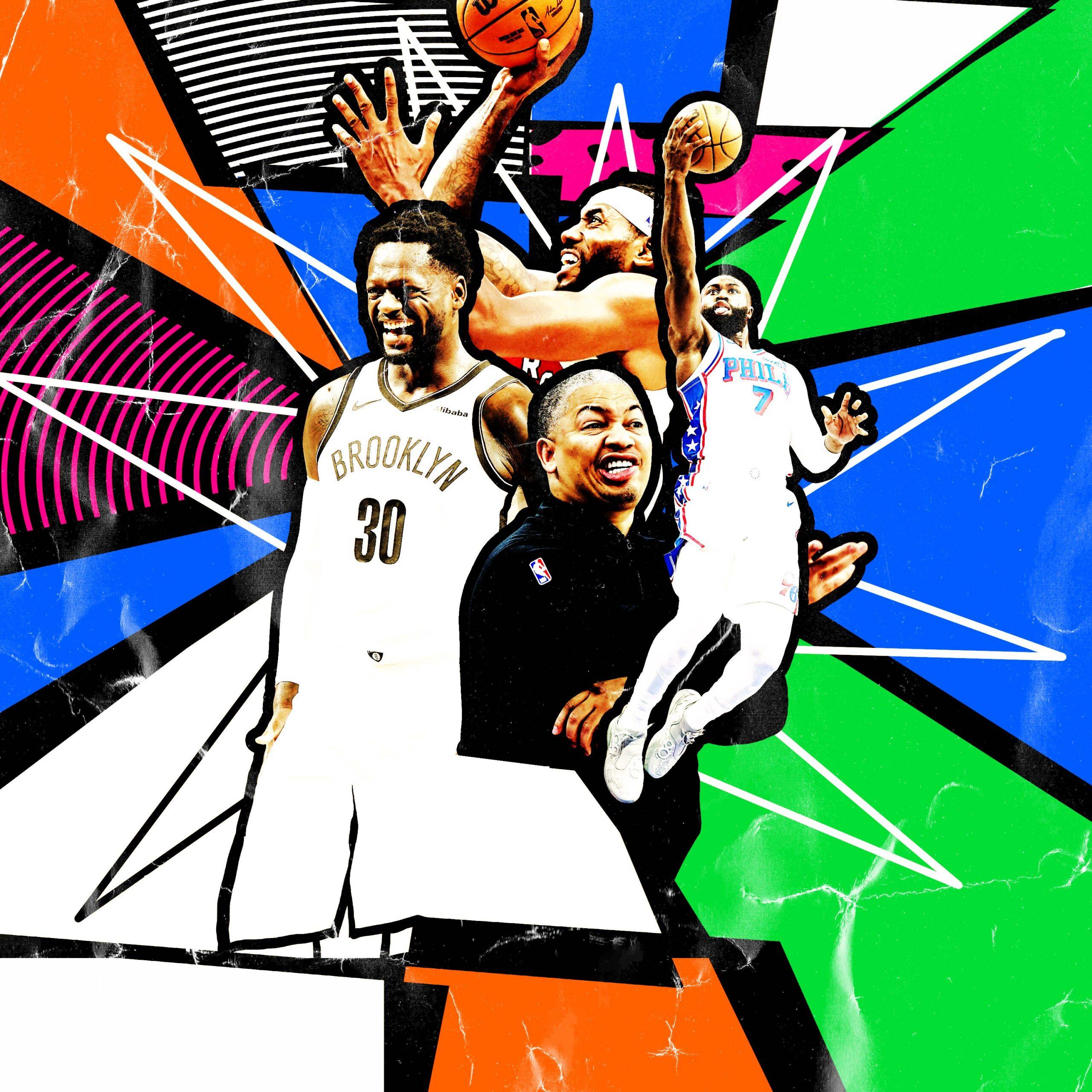

After one of the more shocking, memorable, and landscape-shifting offseasons in recent history, the NBA is back on Tuesday, finally, in all its glory. With the return of basketball comes so many meaningful changes to a league that’s never felt more difficult to forecast. But that won’t stop us from trying.
Welcome to the fourth annual installment of my Increasingly Bold Predictions column! Nothing here should be that confusing. We begin subdued. We then get a little rambunctious. We end in a state of hysteria. Remember: In today’s NBA, the line that separates impossible from realistic can be invisible to the naked eye. Pretty much anything is plausible if you’re willing to delude yourself, which is exactly what I spent way too much time doing over the last few weeks. Let’s dive in.
1. The Spurs will win the title.
2. Victor Wembanyama will win MVP.
We’ll start by connecting two related predictions that are much closer to a formality than a reach. San Antonio’s next championship and Wembanyama’s first MVP are “when” not “if” propositions. Will they happen this season? Next year? How many times before 2030? In a league that lacks certainty, this is as close to a foregone conclusion as we’re going to get.
Assuming Wemby is able to stay healthy for at least 65 regular-season games and then remain upright for another deep playoff run, he should obliterate everyone who crosses his path as an even more skilled, confident, and hungry megastar than the one who carried San Antonio to the brink of a championship last June.
This man is 22 years old, coming off a breakout season that saw him lead a team that went 62-20 with a top-3 offense, defense, and net rating. He finished third in MVP voting, boasted the widest on/off differential in the league, and won his first Defensive Player of the Year trophy with a unanimous vote. Watching Wembanyama flourish on a nightly basis was, without hyperbole, one of the more transcendent visual experiences I’ve ever had as a sports fan. Who knew it could be so thrilling to watch a guard dribble into the paint, sense how hopeless their approach was, and then U-turn back out to the perimeter?
With Wemby at the helm, still improving in every possible way, the Spurs wisely decided to run it back. Everyone from last year’s playoff rotation was retained. No trades were made and their lone meaningful free agent signing was Tobias Harris, who’ll enhance a bench and locker room that could use more experience and shotmaking.
Altogether, having fumbled away the Finals in excruciating fashion, this is shaping up to be an epic revenge tour. Dylan Harper and Stephon Castle are on the cusp of becoming this league’s most dynamic, physical, and explosive backcourt tandem. De’Aaron Fox was an All-Star last season and, despite popular belief, remains a very good point guard. It’s a team that was ahead of schedule last year, and is now, at worst, right on time. (Bonus prediction: If/when Harper gets bumped into the starting five, Devin Vassell will go to the bench instead of Fox.)
3. The Boston Celtics will have the NBA’s best offense.
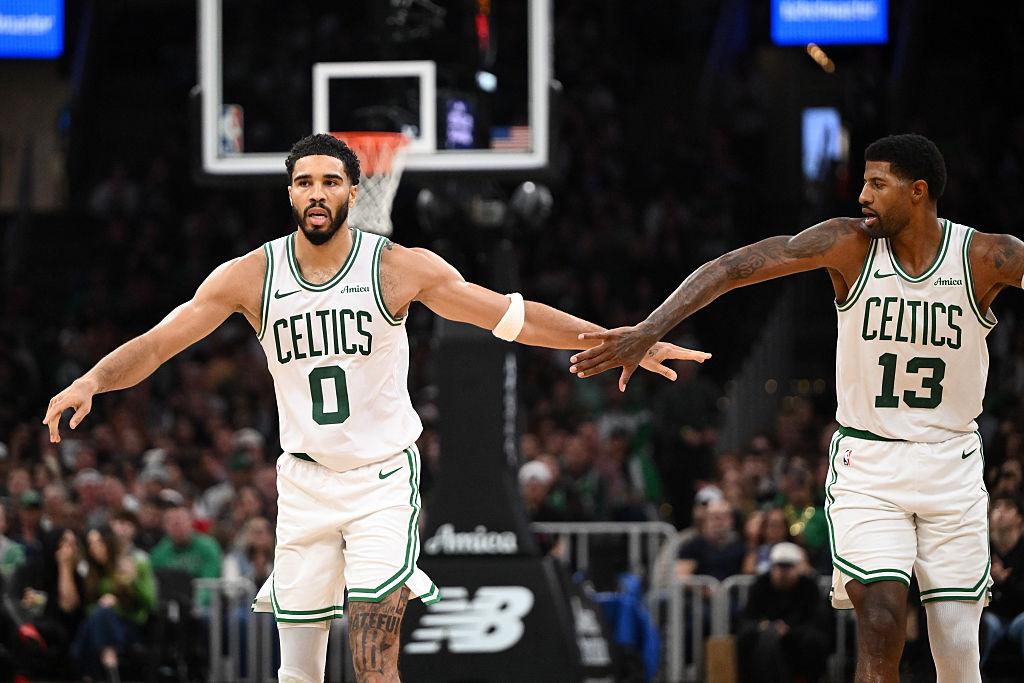
Without Jayson Tatum for all but 16 games last season, the Celtics still finished second in offensive rating. It was kind of amazing. They didn’t have a top-10 true shooting percentage, but launched a ton of 3s, bumrushed the offensive glass, and rarely turned the ball over. A disciplined, data-driven formula for success. Now, with 100 percent healthy Tatum back in the fold to, if not replace Jaylen Brown’s production, effectively enhance an offense that already sparkled without him, Boston’s ceiling goes up several notches. Paul George is a 3-point slinging second-side creator whose antsy off-ball defense, even at 36 years old, will spark more fast-break opportunities than the Celtics are used to. (They ranked 30th in transition frequency last season.)
Mitchell Robinson will do what he does as one of the greatest offensive rebounders in NBA history, generating a boatload of second-chance opportunities that fuel a rejuvenated 3-point attack. Watching him catch lobs and gobble up every miss around the rim during the preseason, Robinson felt like a cheat code in Boston’s starting lineup.
Reputed shooters—like Derrick White and Payton Pritchard—won’t have to shoulder the same amount of playmaking responsibilities that they endured last year sans Tatum. The result: Cleaner looks from behind the arc, more time to puncture rotating defenses, and the return of a more natural pecking order.
The Celtics can stagger Tatum and George, letting either one steer bench-heavy units that have plenty of shooting and at least one other capable ball handler (White, Pritchard, or Mike Conley) on the floor to organize sets and dictate pace. There’s just a ton of depth and so many options, both stylistically and with different lineup combinations. If Jordan Walsh starts, the Celtics will be able to bring Sam Hauser, Neemias Queta, and Pritchard off the bench, a trio that started most Celtics games last year and bludgeoned opposing defenses.
One of the bigger differences between Brown and Tatum is the breadth of choices Tatum provides as someone who can directly involve himself with or without the ball. He can, for example, set ball screens and, depending on how the defense plays it, either attack on a short roll, pop for a 3, or go one-on-one against a switch in the middle of the floor. He’s a huge forward with long arms and A+ defensive versatility. Every five-man unit makes sense with Tatum in it.
As they did last year,the Celtics will take care of the ball, launch a ton of 3s, and dominate the offensive glass. The big difference now is they have more/better players to execute those strengths. And if they play a little faster—as preseason numbers reflect—no team will make scoring the ball look easier. It’s a tried and true formula that’s yielded so much success over the past few years. Offensively, Boston’s roster is arguably the most idyllic collection of players Joe Mazzulla has ever coached.
4. The Indiana Pacers will duck the tax.
The Pacers, owned by Herb Simon, haven’t paid the luxury tax in over 20 years. It’s a streak of frugality only matched by a couple other franchises, and speaks to how magical and unlikely their NBA Finals run was in 2025. But as of today, Indy is nearly $6 million above the tax line. It’d be a little stunning if they didn’t shave a little more than that amount from their payroll over the next nine months. I say this not as a reflection of the team’s ability (they could make another Finals run). It’s more about accepting how history suggests they’ll behave. Maybe that number stays put or climbs even higher. I wouldn’t bet on that happening, though, which is why we can’t rule out the possibility of Indiana simply dumping (the extension-eligible) Jarace Walker into another team’s trade exception.
I like Walker a lot, and think any team that could acquire him at a reasonable price should consider it. The six that make sense have some form of draft capital to offer and a trade exception that’s large enough to absorb his $8.4 million deal without getting blocked by a hard cap at the first or second apron: Houston, Boston, Detroit, Charlotte, Memphis, and Utah. Walker probably won’t swing a series, but he’s a versatile depth piece with tremendous two-way upside, length, and athleticism. If the Rockets, Celtics, Pistons, Jazz, or Hornets landed him, he’d be a fixture in their playoff rotation.
5. The Kings will have the worst defense ever.
Relative to league average, the most maligned defense in the play-by-play era is the 2006 Seattle Supersonics. A historically imbalanced squad that could really score—Ray Allen and Rashard Lewis!—but allowed 7.82 more points per 100 possessions than the league average. These Kings may be even more feeble. Zach LaVine, Domantas Sabonis, Malik Monk, and De’Andre Hunter are four of their most important players. All are subpar—a relatively kind adjective—defenders at their respective positions. Darius Acuff Jr. is an undersized rookie guard who looked either lost or disengaged on that end in pretty much every clip I saw of him at Arkansas. Ben Simmons was, by many miles, their most reliable defender before he ruptured his Achilles over the weekend.
It’s dark. Last season, Sacramento had the third-worst defense and ranked dead last in defensive rating when competing against teams that ranked in the bottom-10 in offensive rating. Those opponents registered an effective field goal percentage of 56.3. Translation: They helped some of the NBA’s least-efficient clubs look like a team full of Luka Doncic clones.
It’s a small sample, but one that generally carries over from their entire time together: In 351 minutes with LaVine and Sabonis on the court, the Kings were ripped to shreds, allowing 130 points per 100 possessions. I’m almost looking forward to seeing the levels of obliviousness that are reached when Acuff gets thrown into an environment that, last seen, barely resembled professional basketball. LaVine’s concern for getting stops when he’s off the ball is remarkable. There were plays last year when he looked like a housecat trying to catch a laserpointer:
His indifference is the stuff of legend. Look at everything LaVine does to help Minnesota’s offense below. He’s a full second late to react whenever the Timberwolves do pretty much anything:
This calls for some kind of prescriptive therapy. Or, at the very least, some life advice from George Costanza. If every decision LaVine made was the exact opposite of his first instinct, Sacramento might find a taker before the trade deadline. Extend that philosophy out to every high-level employee in the Kings organization, and by this time next year we might have a lurking title contender.
6. Cooper Flagg will make an All-NBA team.
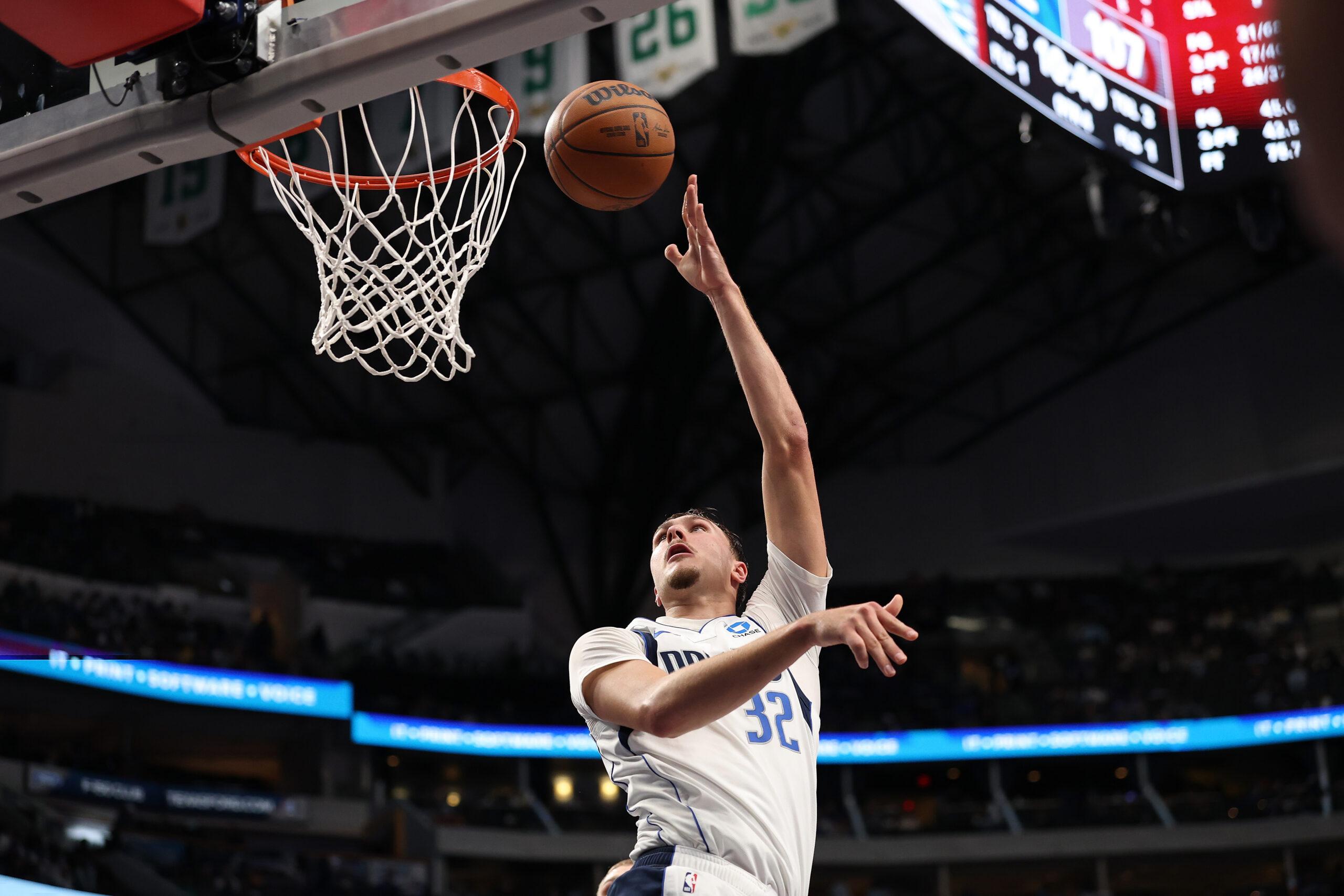
I wrote a deeper piece about Flagg’s potential leap earlier this month, but the gist here is a reminder that we’re dealing with a generational prodigy who should exist in our consciousness the same way LeBron James, Kevin Durant, and Luka Doncic once did. It’s hard to garner attention when Victor Wembanyama already exists as an unparalleled evolutionary superstar, but Flagg deserves a spotlight. He’s a truly special teenager.


7. AJ Dybantsa will not be a Rookie of the Year finalist.
This is no scorcher. Dybantsa was the first overall pick and is very good at basketball, but two significant obstacles exist on his path to being a finalist for Rookie of the Year: 1) The 2026 draft class is awesome, and 2) the Washington Wizards already have two ball-dominant franchise players on their roster.
Cam Boozer, Darryn Peterson, Caleb Wilson, Brayden Burries, and Las Vegas Summer League MVP Yaxel Lendeborg are all strong candidates to place in the top three. Meanwhile, Trae Young and Anthony Davis are not at the “mentorship” stage of their respective careers, either. When healthy, both are better players than Dybantsa; they soak up a ton of oxygen and demand the volume of touches and shots anyone paid a max contract should expect to see. As we just saw with Kon Knueppel, it’s hard to win this award when you aren’t the featured option on your own team. There will be plenty of nights when Dybantsa may not even be third fiddle.
8. Nikola Jokic will lead the league in points, rebounds, and assists.
The dart Nikola Jokic flicked behind his back to Cam Johnson during an otherwise forgettable preseason game earlier this month made every coach in the league shiver. It was more vertiginous than scary, but served as a reminder that the world’s best player is still able to reach heights that have no point of reference and seem impossible before they actually happen. I already knew Jokic was the most resourceful passer in NBA history—a witness to vistas that aren’t noticeable until he reveals them—but am still incapable of understanding how he pulled this one off. It also made me wonder what’s left for him to accomplish. What unreachable milestone can he add to his resume?
Before he suffered a knee injury last December, the three-time MVP led all players in assists and rebounds. The only player who’d scored more points was Shai Gilgeous-Alexander, with Jokic averaging 29.9 per game. No one has ever led the league in all categories. It was the closest to a peak that probably (somehow!) hasn’t happened yet. Jokic was absurdly efficient, making 44 percent of his 3s and actually converting more field goals than any other player (two more than SGA, despite logging 39 fewer attempts).
The thing about this 7-foot genius is that if he wanted to lead the league in scoring, he could without issue or hesitation. He’s one of the most efficient bucket-getters of all time. There’s no type of shot he’s incapable of making. No angle he can’t get to or area of the floor that feels like a weakness. There’s no moment when a defender is relieved to see the ball fly off his fingertips towards the rim. His blend of touch, power, and creativity lacks precedent. And this year, with Peyton Watson gone, a revamped bench, and the need for Denver to balance regular-season success with preservation—i.e., it won’t lean too hard on Aaron Gordon or even Jamal Murray—Jokic may play even more minutes than he’s used to, resulting in a need to put the ball in the basket more than he ever has.
Luka Doncic, Gilgeous-Alexander, Anthony Edwards, Jayson Tatum, and, um, Wemby (dear lord help us) should all compete for the scoring title. Cade Cunningham, Josh Giddey, Doncic, Trae Young, and a few others will battle for the assist crown. Rudy Gobert, Karl-Anthony Towns, Wemby, Jalen Duren, and half a dozen more bigs I don’t have the energy to type right now can grab the most rebounds. But nothing is beyond reason when talking about Jokic, someone who very well may win his fourth MVP, break the all-time triple-double record (he’s only 12 away!), and lead the Nuggets on an unexpected playoff run for the ages.
9. Miami will look like a contender with Giannis on the court, and be utterly hopeless when he sits.
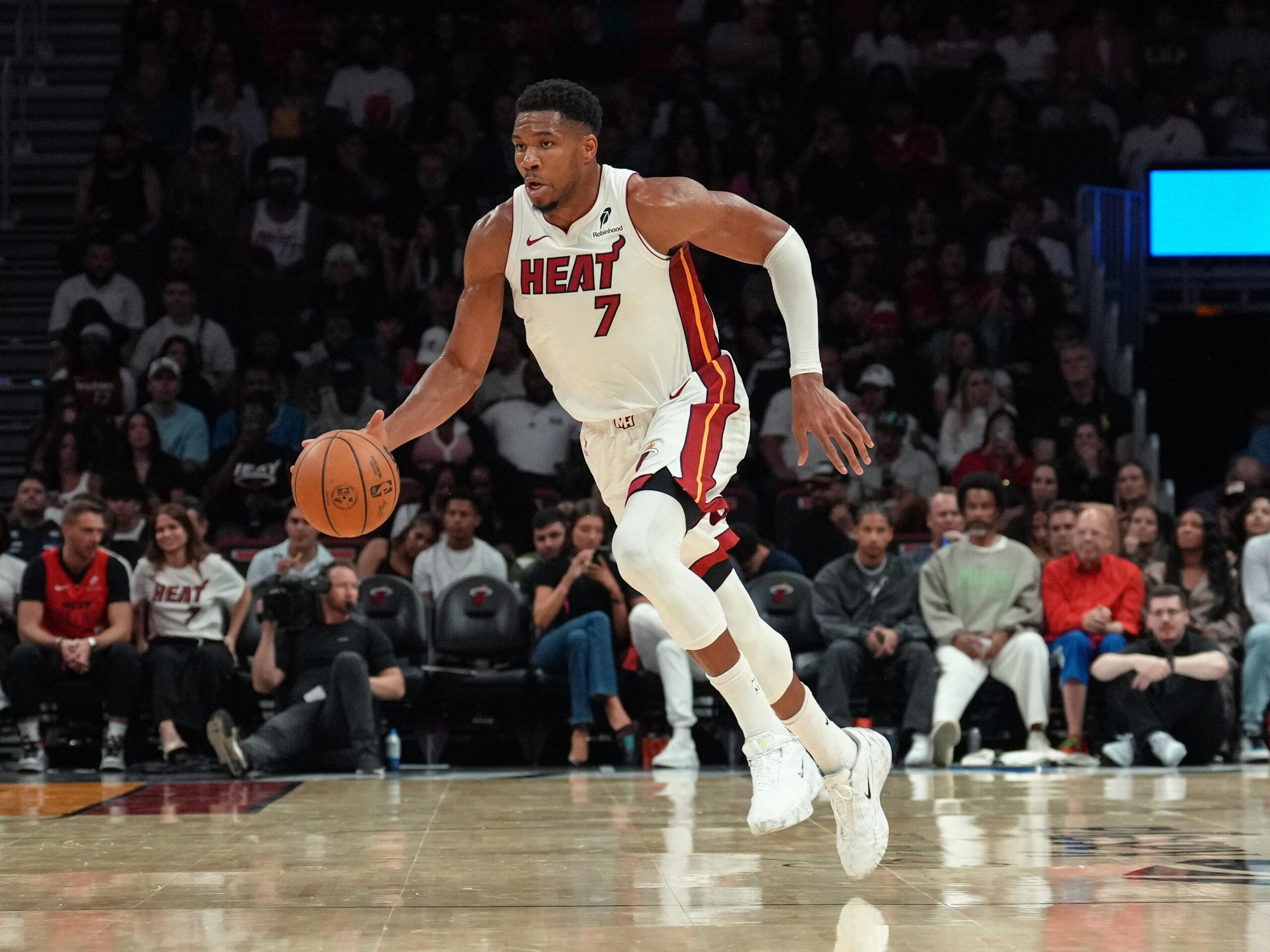
Coming off a prediction about Jokic, the plus/minus God, let’s pivot to a situation that may be even more impressive and/or dire. Should the Heat continue to embrace the brake-fluid-free system that sped their games up last season, Giannis Antetokounmpo—one of the most relentless transition scorers in NBA history—will scamper downhill before opponents are able to get back and form any resistance. Spacing in the halfcourt matters. Having multiple ball handlers is important. But the genius of this offense last year without Giannis was Miami’s ability to avoid inefficient late-clock situations against a set defense—something they did way better than anyone else. That will only improve when he’s on the floor.
I’m just not sure how much of it is replicable when Giannis sits. Who will actually dribble, shoot, and score without him on the court? How will they maintain that pace or execute in the half-court—assuming Klay Thompson and/or Tim Hardaway Jr. will see a majority of their minutes tied to Antetokounmpo? What will their defense look like, even with Bam Adebayo presumably staggered as much as possible? And it’s worth mentioning that Giannis’s body isn’t exactly durable. How will the Heat’s medical team aim to keep him healthy, knowing the long view is more important than any highly unlikely attempt to win the East? Short stints? Will he miss back-to-backs? He’s missed at least 15 games in four of the last five seasons, was hobbled during the 2023 playoffs and injured for all of 2024’s first-round loss against the Pacers.
There’s a decent enough chance Erik Spoelstra figures all this out, but right now it’s hard to see a solution.
10. Rudy Gobert will have the highest field goal percentage in NBA history.
In 1973, Wilt Chamberlain made 72.7 percent of his shots, the highest mark ever recorded among players who got up at least 500 attempts in a season. Last year, Gobert led the league in field goal percentage for the fourth time, making 68.2 percent of his shots. Pretty much every one of them came at the rim, but only 64 percent of the ones he made were assisted—way down from the 75 percent he enjoyed during his first year with the Timberwolves.
Now, Gobert has LaMelo Ball as his point guard, an eccentric basketball magician who will spoon-feed him in several different ways. Think rim runs, lobs, and slick dump-offs. When Gobert’s man commits to Ball in the paint, the front of the rim will turn into his personal buffet line. Uncontested tips and putback dunks galore. Lineups that include those two with Anthony Edwards and Ayo Dosunmu will be virtually unguardable. Gobert will live around the hoop. Can he make 75 percent of his shots? How about 80?
Beyond setting any type of offensive milestone, you can count on one hand the number of non-superstars who will be more important to a team that’s trying to win a championship this season. Whether he’s propping up the defense or making sure Minnesota’s starting five isn’t getting pounded on the glass, Gobert will be critical.
I write this as someone who considered having “Joan Beringer Will Crack The Ringer’s Top 100 by Christmas” as one of my predictions. Even if Beringer exceeds all reasonable expectations—he is, if nothing else, frisky as hell—there still hasn’t been this much defensive pressure on Gobert since he left the Jazz. But at least he’ll have a ton of fun when his team has the ball. Gobert’s average shot distance was 2.3 feet last year. It may fall to 6 inches.


11. The Toronto Raptors will reach the NBA Finals.
I understand the skepticism here. It’s obvious. It’s rational. And honestly, it’s a winning debate. Kawhi Leonard, the primary reason for me picking Toronto to survive the most competitive Eastern Conference landscape in years, is 35 years old and a perennial injury risk. Bet on him at your own peril. But sports predictions are, particularly in this column, less about logic and more about gut feel. I’m not confident picking any team in the Eastern Conference. It’s a loaded field full of appealing, flawed candidates, and if you asked which one was my favorite tomorrow I’d either say the Knicks, Celtics, Pacers, Pistons, or Cavaliers. Many others favor the Sixers and Heat, and you might find one or two fans of the Magic who believe Sean Sweeney is the answer to all their problems.
But what’s most attractive to me about Toronto’s profile outweighs the understandable pessimism. Leonard has not won one playoff series in six years. This is indisputable. But lost in this criticism is the reality that he’s been healthy at the end of two straight seasons. He was active and awesome for teams that disappointed for reasons that had nothing to do with his performance. A couple years ago, the Los Angeles Clippers were unfortunate enough to draw the Denver Nuggets in Round 1. It was a competitive seven-game series that saw Leoanrd average 25 points with a 63.0 true shooting percentage. Not bad! Last year, the Clippers bowed out to the Golden State Warriors in a play-in game where, in 40 minutes, Leonard finished plus-six in a five-point loss.
Last season he posted the highest usage rate and true shooting percentage of his career for a team that faced myriad injuries and wound up trading James Harden for Darius Garland midway through the season. Plop that force of nature onto the Raptors and your absolute best-case scenario is the most tenacious defense in the East (Another bonus prediction: Collin Murray-Boyles is going to make an All-Defensive Team), the league’s top two-way tandem (Scottie Barnes is about to be considered one of the dozen best players alive), and an uptempo offense that has enough 3-point shooting and ball movement to cut through the halfcourt sludge that mangles postseason play.
The Raptors already had a ravenous defense before Leonard showed up, and, by replacing Brandon Ingram, he’ll officially turn it into a band of thieves while boosting an offense that was desperate for the elite three-level scorer he still is. Adding Leonard at the top recontextualizes everything around him. Immanuel Quickley, RJ Barrett, Jakob Poeltl, Jamal Shead, and Ja’Kobe Walter are all pretty good in roles that will be even more straightforward with Leonard and Barnes leading the way. What if Allen Graves is a guy, too? This team rules.
12. The Hornets will trade for a new point guard.
What if Charlotte, a team that just lost its pass-first franchise point guard and failed to replace him with anyone who has a remotely similar skill set, decided to surround Josh Giddey with an entire roster of 3-point shooters? The Hornets have a structured, creatively deceptive, propane-fueled offensive system. If there were ever an environment where Giddey could have a winning impact, it would be this one.
The math is convenient. Charlotte has a $40.7 million trade exception and over 20 tradable draft picks to offer Chicago, a rebuilding team with a new front office and coaching staff that may or may not believe Giddey can accentuate Caleb Wilson and Matas Buzelis. The Hornets can keep all their players, add Giddey, and still stay under the tax. Related and worth repeating: They currently don’t have a starting-caliber point guard! Your mileage may vary on whether Giddey is one, but he makes plenty of sense replacing LaMelo Ball in the short term, initiating sets that would’ve been a burden on Kon Knueppel and Brandon Miller.
I understand why this isn’t perfect and get why Chicago’s asking price may be too high for Charlotte. But the more I write about it here, the more I want to see it happen.
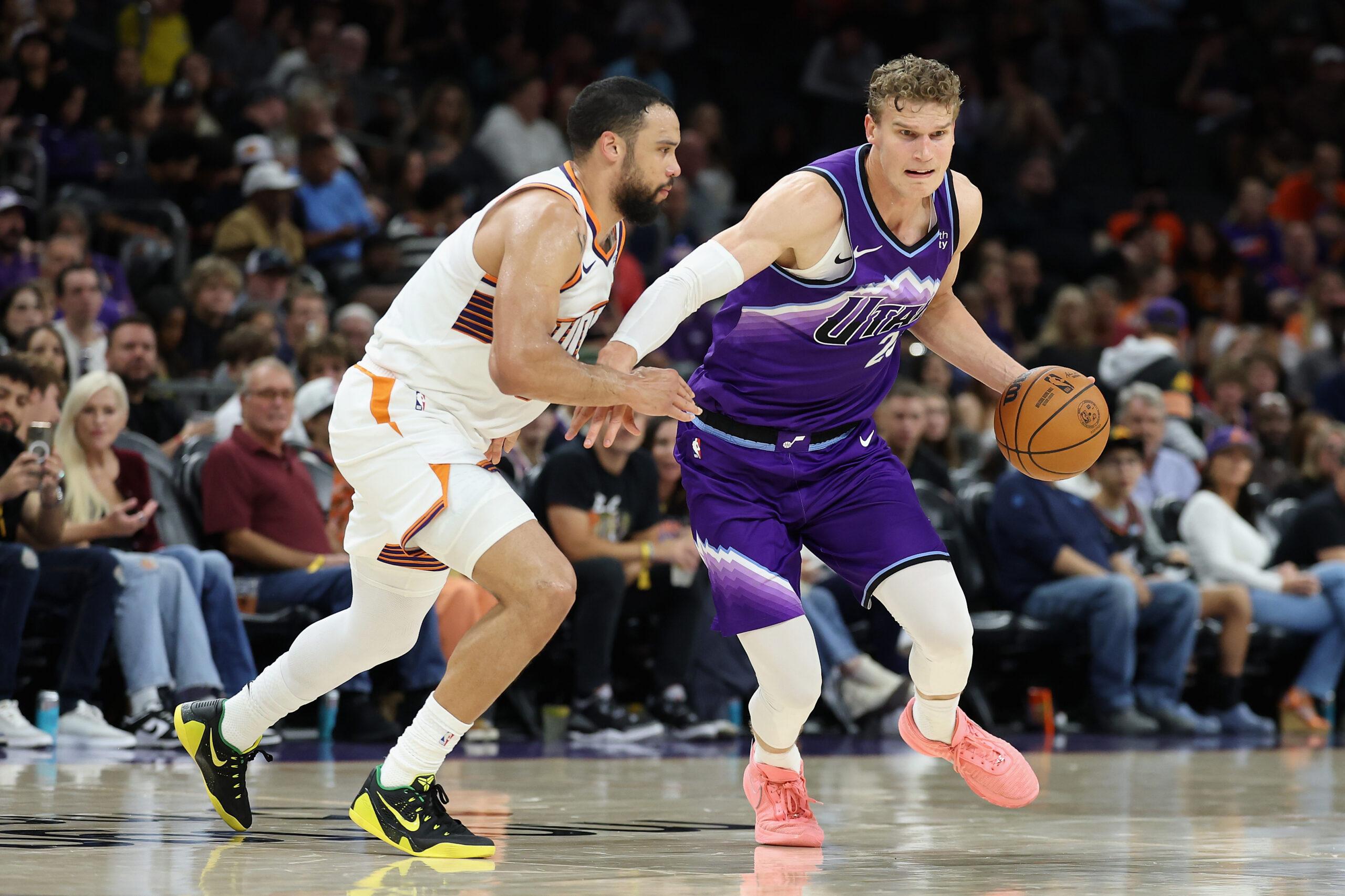
13. The Jazz will trade for a new center.
In light of Jusuf Nurkic’s injury, I would like to see Robert Williams III in Utah. Reunite Timelord with the Ainge family and give the Jazz a defensive inside presence whose passing ability tracks nicely with how Will Hardy—who was an assistant coach in Boston when Rob was its starting center—likes to invert the floor. Everybody wins!
Williams can’t technically be traded until December, but if the Trail Blazers’ season goes sideways and they decide to shed a little long-term money, would they take back Nurkic’s expiring contract and a couple second-round picks? Let the Bosnian Beast cook beside Damian Lillard once again, for old times’ sake? Right now, the Blazers have five centers on their roster, feel a smidge directionless, and should be down to pick up whatever draft capital they can.
To get where they ultimately want to go, the Jazz probably need a more imposing rim protector. Walker Kessler isn’t walking through that door (anymore). Timelord is already 29, and his injury history prohibits him from logging 30 minutes a night, but until they find a long-term franchise center, he’s an affordable stopgap. Williams can still start and/or close games alongside Jaren Jackson Jr. and Lauri Markkanen, forming a complementary two-way trio that reduces some of the pressure JJJ is likely to face on the glass. And while Jaxson Hayes is technically an option, Rob would be a massive upgrade in just about every way as an above-the-rim pick-and-roll partner for Darryn Peterson and Keyonte George.
Some other bigs are potentially available. But Timelord is as fun as any of them, on a contract that won’t cripple Utah’s cap sheet, at an age where he should still have plenty of basketball left in the tank. Availability is always a concern, but the upside is worth it for a franchise that’s looking to turn things around this year.

14. The Pistons will realize Cade Cunningham needs even more space.
Detroit spent its offseason addressing an elephant in the room: It couldn’t shoot, dooming a 60-win season. Isaiah Stewart and Tobias Harris were effectively swapped for Isaiah Joe and John Collins. I mostly like the makeover but can also see it being more of a neutral pause than a clear step forward.
The rest of the conference beefed up, and, as things currently stand (with Ausar Thompson and Jalen Duren assuming even larger roles despite their inability to space the floor), the Pistons could use another large body whose gravity is felt 25 feet from the rim. It’d be a huge bonus if they could grab one who fits into their $15 million trade exception on a short-term deal.
Enter Rui Hachimura, an ideal backup power forward who doubles as literally the most accurate 3-point shooter in NBA playoff history. He’s owed $14 million this year with a $14 million team option next season; what purpose does a contract this useful serve on the Los Angeles Clippers? Trade bait!
Hachimura can’t be dealt until December 15, but if the Pistons are willing to surrender a lottery-protected first-round pick in this year’s draft, the only reason Los Angeles would say no is if it had a better offer from someone else. The Clippers are stuck in a wasteland. They need as many bites at the apple as they can possibly get. Throwing in Taurean Prince’s expiring contract would make it easier for the Pistons to duck back under the luxury tax while ensuring they’d stay safely beneath the first apron.
This is a pretty good team with a few obvious gaps to fill if it wants to seriously compete for a championship. One is in the frontcourt, where Rui can complement Detroit’s three foundational pieces or simply be the backup for John Collins that doesn’t currently exist. Much like Luka Doncic before him, Cade would very much appreciate having Rui around.
15. The Orlando Magic will break up their dynamic duo.
As a scarred individual who thought the Magic would win the Eastern Conference last year (lol), I go back and forth about what this team is capable of right now. I still like their foundation, believe Desmond Bane (who didn’t miss a game last year) is an ideal fit, and think Anthony Black will have some kind of breakout season.
But the finances are tough to reconcile. This is one of the most expensive payrolls in the league, and if Orlando can’t justify that investment with a team that’s even close to winning a championship, what’s the point in keeping them together?
I think Paolo Banchero can do things that are extremely hard to replace. His size, vision, and ability to live at the free throw line are a lethal combination. If Orlando sticks by him and chooses to trade Franz Wagner instead, why not call up the most desperate team in the league? And if the Los Angeles Clippers are willing to give up Darius Garland and the two first-round picks in 2031 and 2033 that they just received from Toronto, the Magic should seriously consider it.
This trade isn’t perfect, but it is the type of shake-up that can radically dynamize their offense by accentuating Banchero with a complementary firecracker who can do even more damage moving off the ball than when it’s in his hands. On top of that, the Magic will cut long-term salary and pick up two valuable trade assets after they depleted their haul going after Bane a couple of years ago.
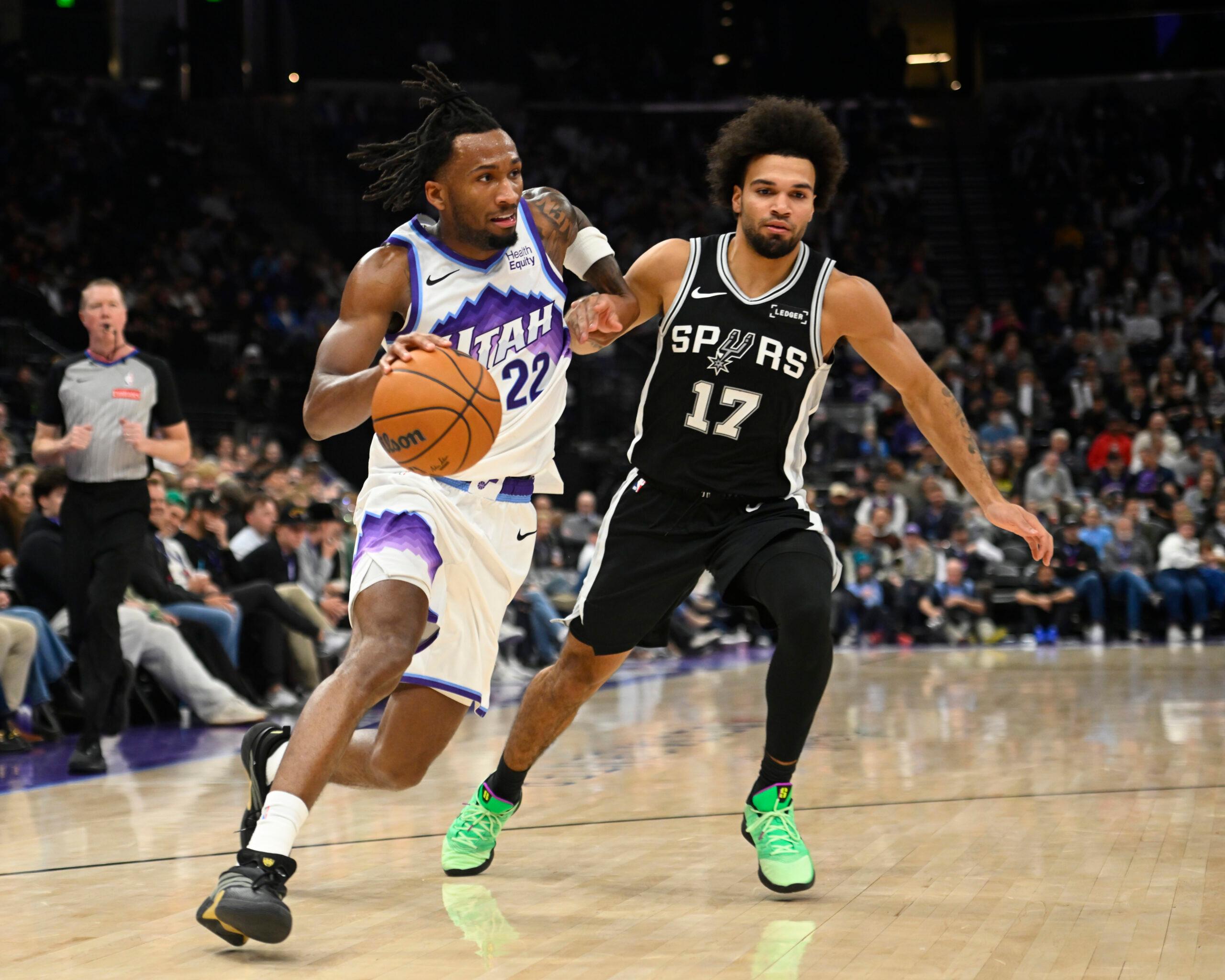
16. Darryn Peterson will be an All-Star … this season.
I don’t watch college basketball for many reasons. One of the larger ones being that it’s a piss-poor facsimile of what you get in the NBA. The speed, spacing, intuition, officiating, rule book, and talent all combine to effectively render the college game a different sport from what we see in the pros. I’m already watching way too much League Pass as it is and don’t have the time/energy to suss out what will or won’t translate at the next level. But sometimes there are sophisticated prospects whose hand-in-glove fit for the NBA is immediately obvious—future stars who will really bloom once they’re surrounded by teammates who can shoot, pass, and read the floor.
Peterson is a perfect example. I don’t care what happened at Kansas. He was born to carve up the best defenses in the world. He takes over almost effortlessly, whether he has the ball in his hands or not. (I love a guard who can throw a lob on one play and catch it on the next.)
He has timing, strength, and feel. Peterson already knows how to create space with his upper body and has a shot release that’s quick enough to make him unguardable pulling up off the bounce, whether a hand happens to be in his face or not. Swerving downhill from dribble handoffs and ball screens, he goes at his own pace, changes speeds, and knows how to keep multiple defenders off balance at the same time. These are the mature qualities most high-usage stars don’t learn until they’re several seasons into their careers. Peterson will step into the NBA with them already in tow, on a team that—despite Jusuf Nurkic’s foot injury—should absolutely be competitive enough to keep his name in Rookie of the Year conversations.
Going one step further, not only do I think he’ll be Utah’s leading scorer, but I believe Utah will have one of the most efficient offenses in the league when he’s on the court. Coaches may not want to pick a rookie for the All-Star Game (on a team that has other candidates like Lauri Markkanen, Jaren Jackson Jr., and Keyonte George), but they may not have a choice. Peterson didn’t set the world on fire in college, but the past is irrelevant. In the present, he’s going to harpoon opponents that don’t know how to protect themselves.

17. If not Peterson … Keyonte George will be an All-Star.
Come hell or high water, the Jazz will have an All-Star in their backcourt!
18. The Lakers will have a top-10 defense.
Molding a successful defense in today’s league is less about the quality of each individual and more about the positions they’re in to collectively execute a workable scheme. The Lakers have two huntable liabilities on their roster in Luka Doncic and Austin Reaves; they are essentially tinfoil trying to stop a jackhammer. We know this. But we also have some evidence to the contrary: a 1,611-minute sample size over the past couple of years of Doncic and Reaves sharing the floor in lineups that have been 3.0 points per 100 possessions better than league average on defense. (In 690 minutes without LeBron James, those numbers get even better—even after accounting for 3-point luck.)
How much of that is real or sustainable is fair to debate—this team may miss Marcus Smart—but there are clear avenues to improvement, too. The Lakers (and Mavericks beforehand) haven’t been good enough getting back in transition with Doncic on the floor. This is, um, partly Doncic’s own fault thanks to his obsessive need to bark complaints at referees. But those self-inflicted wounds can, at some point, be countered by the low turnover rate and high free throw rate Doncic’s teams have when he’s commandeering an offense.
And then there’s the supporting personnel that should play into JJ Redick’s predilection for a hyperaggressive, turnover-generating approach. Assuming Walker Kessler stays healthy, Los Angeles has an elite rim protector roaming the baseline, forcing floaters and contesting shots at the basket that were easy peasy last year (when the Lakers finished 29th in opposing field goal percentage at the rim). In front of their new franchise center are handsy irritants like Matisse Thybulle, Ziaire Williams, and Quentin Grimes. Altogether, they can switch 1 through 4 or 5 (when Kessler is off the court), go zone, and pick up opponents full court.
The roster isn’t constructed with defense as a priority, but if they receive consistent buy-in from their two best players, the Lakers can surprise people. They should be able to rebound, rack up a ton of steals, avoid silly fouls, and toggle between different schemes that will protect their liabilities. I’m somewhat irrationally bullish!
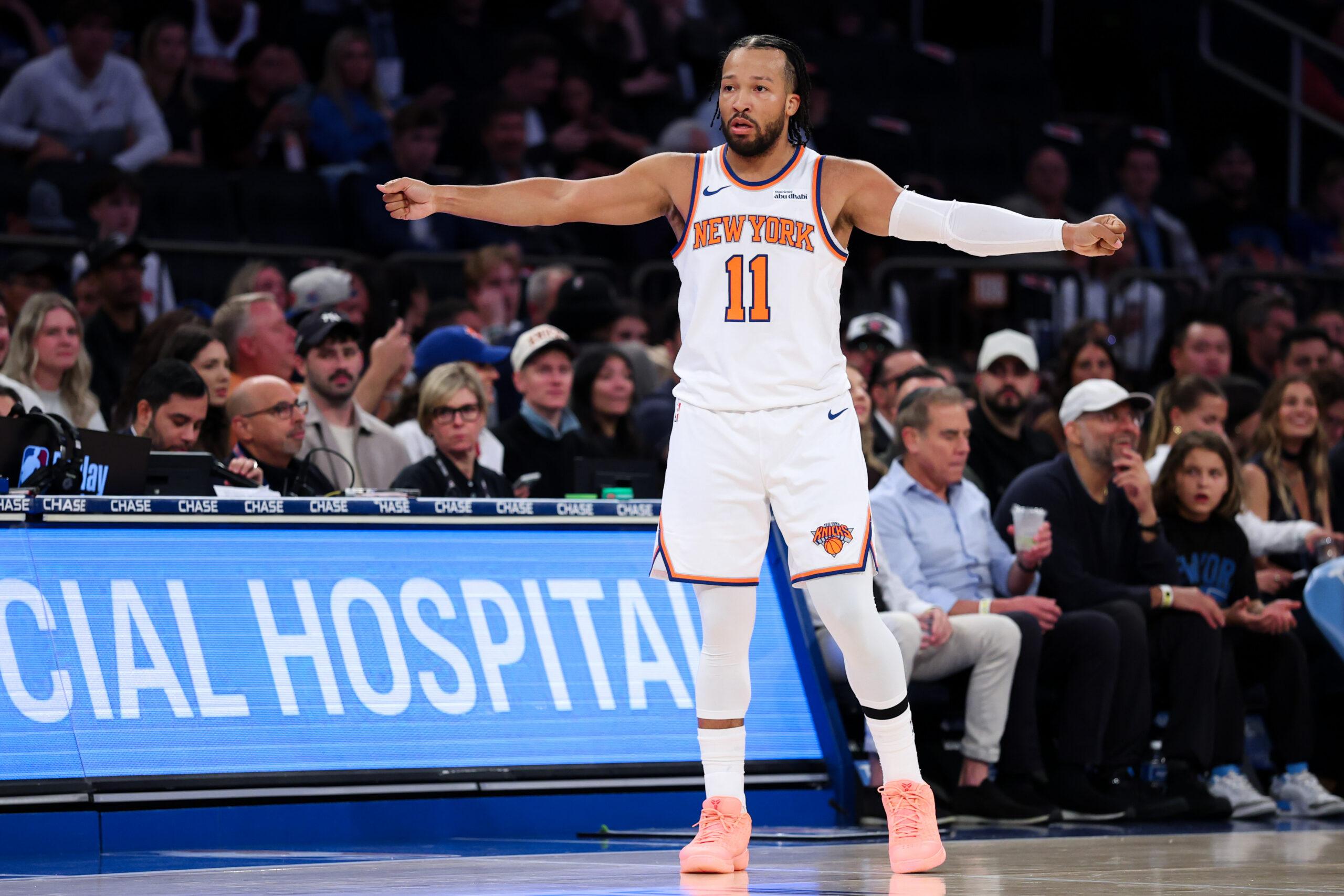
19. The New York Knicks will not have home-court advantage in the playoffs.
To all the wonderful fans out there who read this and immediately started to grind their teeth, I kindly ask that you put down your chainsaw, take a deep breath, and count back from 10. The Knicks are still awesome, and thinking they may finish with the fifth-best record in the conference does not portend disaster. It has more to do with the booby-trap-laden regular season in a significantly tougher conference and the very large target on their back for the next six months.
Every team will have the reigning champs circled on their calendar. Every night at Madison Square Garden will seem more important for the visitor than it actually is. Wins won’t feel as significant for a group that has to deal with the emotional hangover of a championship run that was singularly poignant. Carrying that adrenaline throughout the season, knowing availability is one of the most significant variables that can knock them off their pedestal, isn’t practical. It’s human nature for the Knicks to take a step back and not care as much as everybody else. They know they can win playoff games on the road and know they’ll burst with confidence in crunch time.
To New York’s credit, home-court advantage is trivial so long as Jalen Brunson still has two legs, Karl-Anthony Towns harnesses the playmaking virtue that carried New York’s offense through the first few rounds of last year’s playoffs, OG Anunoby drills every shot while making whomever he’s on think basketball is no longer a fun sport, and everyone else thrives in their supporting roles.
But the Knicks were not head and shoulders above the field last season—they finished 12-12 against teams that had a top-10 net rating during the regular season—and said field appears to have gotten significantly better. To say nothing of the aggressive moves we’ve seen from bottom feeders and the middle class, one could argue that every Eastern franchise that’s realistically vying for a shot at the crown (Philadelphia, Indiana, Toronto, Boston, Cleveland, Detroit, and Miami) improved over the summer. Meanwhile, the Knicks took a step back. Losing Mitchell Robinson really matters. He’s a transformational offensive rebounder and defensive presence who was integral in the NBA Finals.
And then there’s the matter of James Dolan’s allergic reaction to the second apron. Towns, Josh Hart, and Miles McBride all want a contract extension, but negotiations with the front office have been tabled indefinitely. It’s too strong to label this drama a kind of self-sabotage, but the distraction that will ensue could certainly have been avoided for a team that should instead be focused on defending its first championship in over 50 years.
20. Zero playoff teams from last season will have a better record this year.
It’s a new day. The reformed lottery system is poised to completely alter how teams will behave this season. Winning matters, and losing (intentionally or otherwise) is subject to punishment. Thus, bad teams hoping to strike gold in the lottery won’t undercut their own rosters by strategically resting their best players. They won’t accept embarrassing blowouts or carefully avoid narrow wins. Instead, mistakes will be rectified, talent will see the floor, and organizations that aren’t doing too hot will strive to either avoid the relegation zone or make the play-in tournament.
Now, there will almost definitely be a few outliers—Toronto and Philadelphia have a case, as do healthy versions of San Antonio and Oklahoma City—but for the most part, every game will feature two teams that want to win. What a novel concept.
21. The Houston Rockets will reach the conference finals.
Depth, defense, and dynamism are three critical ingredients if you want to be elite in today’s NBA. Even if they haven’t won a playoff series in three seasons under Ime Udoka, the Rockets check all three boxes heading into this season, buttressed by several helpful qualities: championship experience, an established two-way identity, and ascending All-Star-caliber talent. Houston can be one of the rare teams that obliterates opponents on the offensive glass without suffering through any negative trade-offs the other way.
And even if their half-court attack isn’t particularly elegant, having Fred VanVleet back to steer the wheel on both ends will at the very least allow this team to avoid some of the potholes it repeatedly plunged into without him. (The Rockets’ half-court offense was about average during FVV’s first two years with the team, but neither of those offenses had Kevin Durant functioning as the tip of the spear and/or a trusty release valve.) Houston isn’t built for elegance. Its offensive system is not some layered, free-flowing installation. But so long as the defense does its job to spark transition opportunities the other way, all the Rockets need are a few more reliably efficient crunch-time options. Durant shouldn’t need to face another season scooching his way through a series of predictable actions that the opposition is waiting to pounce on.
Varying degrees of growth from Houston’s quartet of harmonious building blocks would go a long way. Amen Thompson, Alperen Sengun, Reed Sheppard, and Jabari Smith Jr. each bring something valuable to the table. Tari Eason was re-signed to an extremely team-friendly extension. Marcus Smart is coming off a career-saving season in L.A. in which he showed he can still thrust games on a Tilt-A-Whirl (that’s a compliment). And if we’re operating under the assumption that everyone will be healthy when the games really matter—especially Steven Adams, who is Houston’s back brace—then they match up fairly well against just about any team in the West. The Rockets wouldn’t be favored to beat the Oklahoma City Thunder or San Antonio Spurs, but with a little bit of luck, there’s definitely a path for them to take down one of them in the middle of a playoff run. Beating both? Borderline impossible. Avoiding one in the first two rounds? Not outlandish!
Regular seasons are long and treacherous. Can the Spurs and Thunder meet in the second round as respective no. 1 and no. 3 seeds? Definitely. If that happens (and Houston is the no. 2 seed), who knows how far the Rockets can go? At their very best, they’re able to blend composure with brute strength. That’s a dangerous combination.
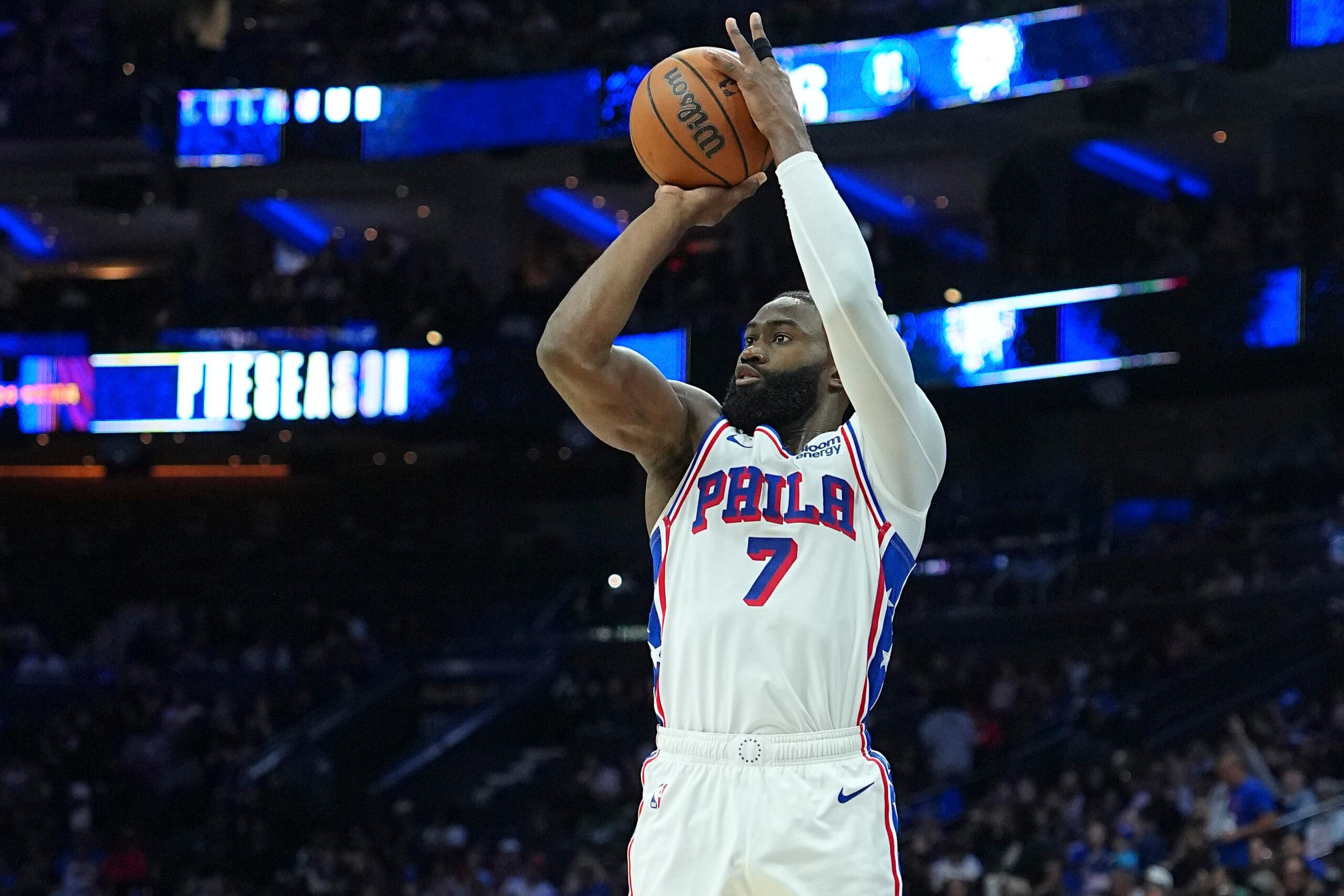
22. Paul George will be an All-Star.
23. Jaylen Brown will not be an All-Star.
On the surface, this reads as pure delusion. Just below the surface, it’s still laughable. But dig a little deeper—as I did, comparing and contrasting these two wings in my free time all summer long—and you’ll find a world where it makes perfect sense. Not to be reductive, but by the time All-Star ballots are due, I think Boston’s record will warrant two slots, and I believe it’d take a truly special season for Philly to warrant three or four All-Stars. I’m penciling in Tyrese Maxey, and LeBron James is a safe bet to get selected by the coaches who will keep voting for him no matter how he looks until retirement. If he declines their invitation and the Sixers sit near the top of the East, Joel Embiid exists. In several ways, Brown feels like the fourth man in his new team’s pecking order. That may evolve, but his numbers are still guaranteed to fall.
Meanwhile, George is a nine-time All-Star who, when he isn’t hurt, usually makes the All-Star team. That part about “when he isn’t hurt” is no small caveat. He’s 36 years old and has appeared in only 78 games over the past two seasons. But today, as I write this, George is healthy, moving well, and holding a broad role for a team that should present plenty of opportunities for him to bounce back toward the scoring averages he enjoyed in Los Angeles. The connection he’ll share with Brown this season is fascinating. It wouldn’t be that bizarre if they filled each other’s shoes.
24. The Nets will make the play-in tournament.
There were moments this summer when I, a Brooklyn resident who covers the NBA, forgot the borough is home to a professional basketball team. But then I’d get off the subway and see “Nets suck” sprayed on a wall or doomscroll past the humiliating clip of Michael Porter Jr. not being allowed into the same club as Jalen Brunson, and it’d hit me. Oh yeah! Two NBA teams call New York home.
If you watched the Nets last season, you know this roster has improved. And if you can look past the embarrassing anonymity they've endured since their crosstown “rival” won it all, it’s not completely unreasonable to think they could be scrappy overachievers. Based on where they were a year ago, how many teams added more talent and experience to their roster this summer? Last year’s Nets were best known for playing five first-round picks in the same rotation. Purposeful or not, it was kind of a disaster; none of them made an All-Rookie team, and Brooklyn futilely threw away its second straight season trying to land a top pick. What they’ve built in response to that disappointment isn’t a world-beater, but it is leaps and bounds more competent.
In his first two seasons as the head coach of a team that often started games with a 15-point deficit, Jordi Fernández proved shrewd, inventive, and honest about what he sees and wants—the type of leader who’s able to create an environment where Brooklyn’s whole can be greater than the sum of its parts. They’ll use the entire floor, share the ball, and have high-level shooters who can shift the defense when they don’t have it.
I recognize the obvious and myriad shortcomings this roster has, particularly how thin they are at the center position. Day’Ron Sharpe is better suited to be a playoff team’s backup than a rebuilding team’s starter. But I still think their pieces fit well enough to compete with more accomplished opponents. The offense, especially, can be explosive with a modestly high floor.
Let’s start with Julius Randle. For any team that’s trying to make some noise in the playoffs, hard pass. For any team that would be thrilled not to finish with one of the worst records in the league, yes please. Randle is a chucker whose decision-making process doesn’t always jibe with the fact that basketball is a team sport, but he’s also a box-score-stuffing innings eater who’s made two All-NBA teams and is hungry for another contract. Randle hasn’t been on a bad offense in five years. He can score. He can facilitate. He can leverage his physicality to force adjustments from the opposing coaching staff. He can be the rugged, high-usage primary option Brooklyn hasn’t had in years. (Not for nothing, but the only player who had a more positive impact on his team’s true shooting percentage last year was Nikola Jokic.)
If I could pick one star to copilot an offense with Randle, it might as well be Porter, someone who can make a defense sweat without ever touching the ball. MPJ deserved to make last year’s All-Star team and did a phenomenal job moving off the ball, flaring for 3s, back-cutting for layups, and regularly setting rip screens that led to a good look for somebody else. This is such a portable, complementary offensive player.
Egor Demin, now Brooklyn’s starting point guard, was my favorite rookie before last season even began—a.k.a. before anyone realized he could really shoot—and I’m bullish on all the ways his playmaking instincts will flourish on a team that has more experience and know-how.
Mikel Brown Jr. is a lottery pick who can also drill pull-up 3s. Mistakes will be frequent on the defensive end, but this isn’t a situation where a rookie is thrown into the fire. Much of Brooklyn’s playmaking responsibilities will fall elsewhere.
And then there’s the incoming savvy. Keon Ellis (the likely starting 2 guard) and Mo Wagner are a pair of veterans who’ll embrace sacrificial responsibilities and know how to execute a game plan. This is exactly what Fernández didn’t have last year. The Nets still managed to do some smart things, though. They limited opposing 3s on defense (while suffering through the second-worst 3-point luck in the league) and then, on offense, finished top 10 in 3-point rate and at-rim frequency.
Am I grasping at straws? Probably! But in the spirit of writing a column that tends to go off the rails, why can’t the Nets be a pleasant surprise?
25. Ty Lue will become head coach of the Philadelphia 76ers.
I don’t know when this will happen or whether it’s even possible: Lue is one of the highest-paid coaches in the league (he makes $14 million per year) and is under contract with the Los Angeles Clippers through 2029—a deal he signed before they moved into the Intuit Dome, back when PG, Kawhi, and James Harden were still on the roster.
That all feels like it happened 46 years ago, thanks to recent developments that include a cap-circumvention scandal and a backbreaking punishment handed down by Adam Silver. The Clippers no longer have any stars and are on track to become one of the league’s worst and/or least relevant franchises for years to come.
Beneath such unprecedentedly harsh circumstances, a coach of Lue’s stature makes zero sense. Anything can happen in the NBA, but I assume he signed his extension believing the Clippers would be a contender for most, if not all, of it. I also assume Lue likes getting paid humongous sums of money to coach basketball. He’s excellent at it and wouldn’t seek any kind of buyout unless an opportunity to win at the highest level came around.
A lot needs to happen before the Philadelphia 76ers can qualify as that. They currently employ Nick Nurse, an NBA champion and one-time Coach of the Year. He is also excellent at his job, and very well may steer the league’s most talented roster to the promised land. This is nothing against Nurse, but several factors outside his control make me skeptical that this will go well.
I think the Sixers will fall well short of their expectations and struggle to find any consistent rhythm or on-court identity, and if/when that happens, the first scapegoat will likely be Nurse, who enters his fourth season in Philadelphia with a losing record. No head coach should feel more pressure right now. Getting Joel Embiid, LeBron James, Jaylen Brown, Tyrese Maxey, and VJ Edgecombe to sacrifice for the greater good, at various stages of their respective careers, will not be easy. Their games vary in compatibility, and building a top-10 defense around them may not be possible.
Bob Myers knows he can’t fire Nurse without a respected, accomplished replacement in mind and available. Who would that even be? How many coaches, period, have enough gravitas to walk into that locker room and lift a sinking ship? How many can tolerate the endless media attention, nationwide scrutiny, and perennially injured franchise player?
The only answer that’s even semi-plausible is Lue, who obviously has a successful preexisting relationship with LeBron, coached Embiid at the Olympics, and is familiar with the new Sixers president of basketball operations, Mike Gansey, from their time together in Cleveland.
I fully acknowledge that there are probably too many moving pieces for this to take place during the regular season. I also see the desperate conditions under which it makes too much sense not to happen.
26. Victor Wembanyama will not win Defensive Player of the Year.
Just kidding! Enjoy the season!