
Eli Stowers

Experience
POSITION STATS LAST SEASON

Position-Specific Grades
COMBINE RESULTS
The Takeaway
The Player
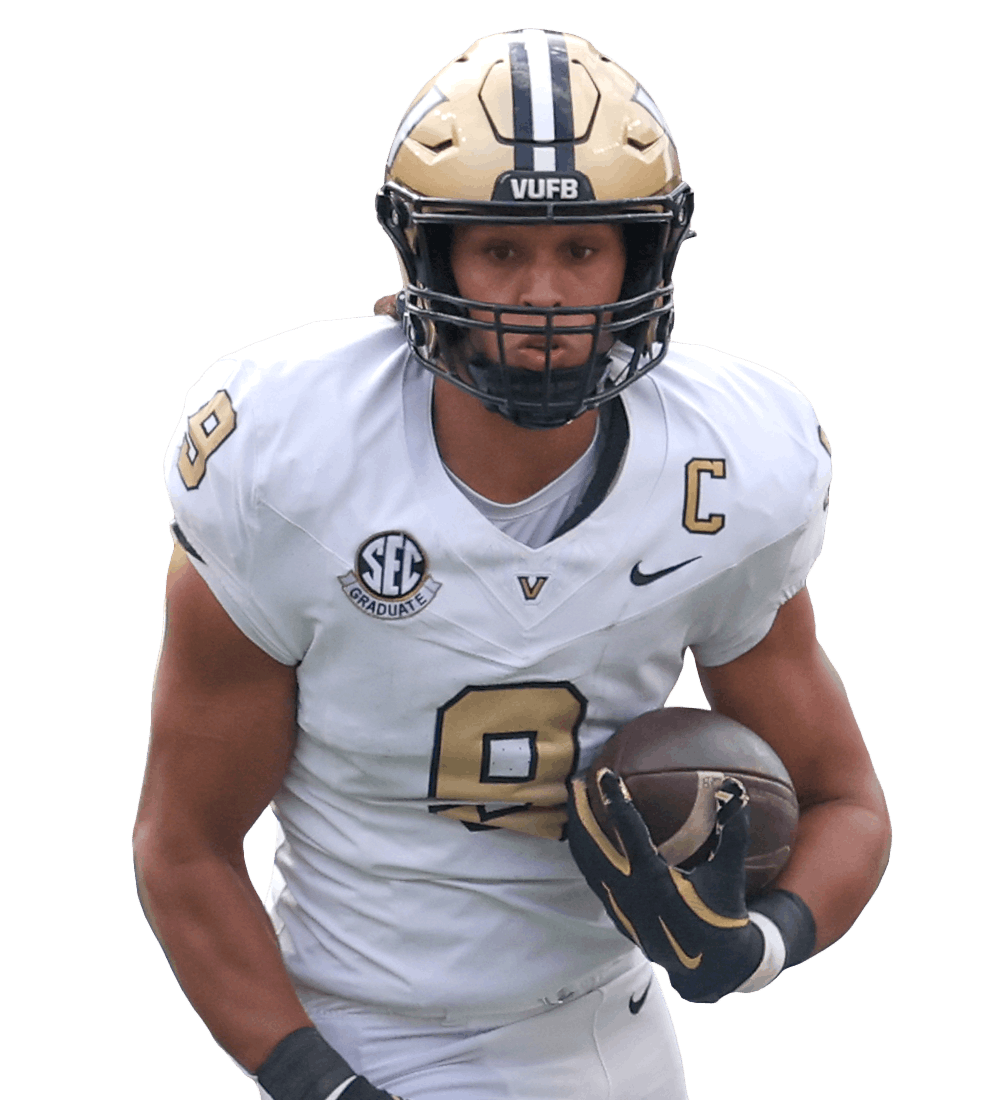
Stowers is a versatile F tight end with big slot receiver traits. Despite spending only three seasons at tight end (he began his college career at QB at Texas A&M and was a wide receiver at New Mexico before transferring to Vanderbilt), he’s already shown an efficient, explosive profile, and his rapid development as a pass catcher makes him especially intriguing. He recorded a high rate of chunk plays (30.6 percent of catches going for 15-plus yards), was efficient (2.43 yards per route run), was solid after the catch (5.9 yards per reception), and flashed a good tackle-breaking ability (nine forced missed tackles) last season. Stowers also has outstanding athletic testing numbers (4.51-second 40 speed, 45.5-inch vertical, 11-foot-3-inch broad jump) that could make him a mismatch creator in the NFL.
Stowers showcases elite spatial awareness and coverage recognition as a route runner, consistently adjusting and finding soft spots. He also has the burst to threaten linebackers and safeties vertically, particularly up the seam. However, his routes sometimes lack urgency, and issues like rounded breaks, slow releases, and delayed head turns limit his ability to consistently stress defenders.
He has reliable hands (4.1 percent drop rate in his career), is a good ball tracker, and transitions well after the catch. His main deficiency as a receiver is at the catch point, where he lacks the strength and physicality to consistently win in contested situations. As a blocker, he gives good effort and shows an understanding of angles and leverage, but he’s unlikely to be more than serviceable in the NFL given his background as a converted quarterback and receiver.
The Draft
Stowers isn’t enough of a proven commodity to earn a first-round grade, despite his rare athletic and mental traits. However, he should be a top-50 pick and the second tight end off the board in 2026.
The Projection
Stowers is still developing and needs to improve his route-running urgency and catch-point physicality. But from an athletic and explosive profile standpoint, he’s in the same elite tier as Vernon Davis, Kyle Pitts, and Noah Fant. Combine that with his year-over-year production improvements and exceptional intelligence testing, and there’s a chance he’ll emerge as one of the best offensive playmakers from the 2026 draft class in a year or two.